
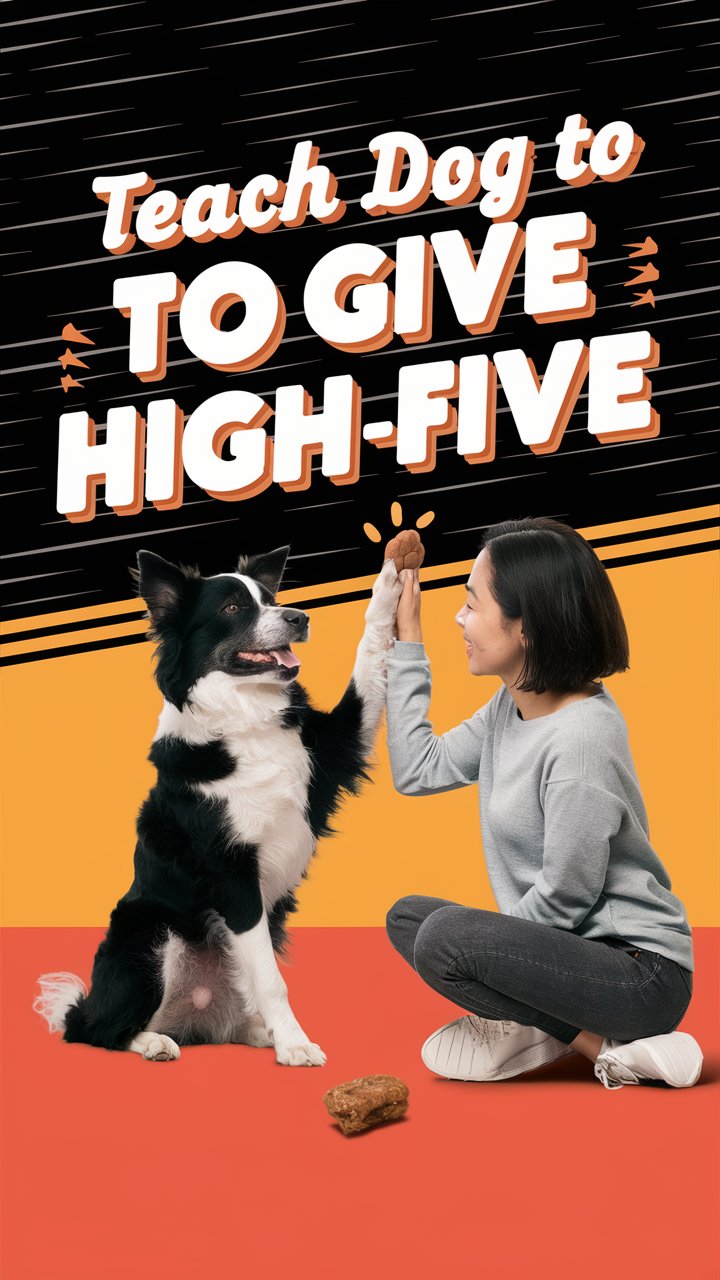
Teaching your dog a high-five isn’t just adorable—it’s one of the easiest and most fun tricks to start with. Whether you’ve got a playful puppy eager to learn or an older dog looking for a cool new skill, the high-five is a crowd-pleaser that strengthens your bond and boosts your dog’s confidence.
In this step-by-step guide, you’ll learn exactly how to teach your dog to high-five, avoid common mistakes, and even level up with advanced variations like a double high-five or low-five.
⭐ Why Teach Your Dog a High-Five?
Before we jump into the steps, let’s talk about why this trick matters:
- Bonding Time: Every training session deepens your connection.
- Confidence Boost: Simple tricks help shy dogs feel proud and motivated.
- Mental Stimulation: Learning new commands keeps your dog sharp.
- Party Trick Bonus: Let’s be honest—your friends will love it!
🐶 Step 1: Start with the Sit
Your foundation for every trick begins with sit.
👉 Why it matters:
If your dog can’t sit still, high-five training will feel chaotic.
How to do it:
- Ask your dog to sit.
- Hold a treat close to their nose to get focus.
- Wait until they’re calm and attentive.
💡 Training Tip: Use small, healthy treats to keep your dog motivated without overfeeding.
🐾 Step 2: Teach the Paw Target
Now that your pup is seated and ready, introduce the paw action.
- Hold a treat just above paw level.
- Most dogs will instinctively lift a paw to reach it.
- The moment their paw lifts, say “Yes!” or “Good!” and reward.
- Repeat until they understand that lifting their paw = reward.
🐕 If your dog isn’t lifting their paw naturally, gently tap their leg or nudge their paw upward. Some dogs just need a little encouragement.
✋ Step 3: Shape the High-Five Motion
This is where the trick comes alive.
- Open your hand, palm facing your dog.
- Encourage them to touch your palm with their paw.
- As soon as they make contact, say “High-Five!” and reward.
- Practice until they confidently press their paw to your palm.
💡 Pro Tip: Hide the treat in your other hand at first, so they don’t just try to nibble your palm instead of pawing it.
🔁 Step 4: Practice & Perfect
Consistency is key. Keep sessions short (5–10 minutes) and positive.
- Slowly reduce treat use, replacing with praise or belly rubs.
- Practice daily until your dog gives high-fives without hesitation.
- Once mastered, add variations like:
- Double High-Five (both paws at once)
- Low-Five (palm down instead of up)
- Wave (pull your hand away mid-high-five)
🐾 Advanced Challenge: Use clicker training for faster results. A clicker makes timing crystal clear, so your dog knows exactly what action earned the reward.
❌ Common Mistakes to Avoid
Many owners hit roadblocks here. Watch out for these pitfalls:
- Impatience: Some dogs learn fast, others take a week. Stay calm.
- Skipping Sit: Without sit, your dog may jump or scratch instead of pawing.
- Too Many Treats: Overfeeding leads to distraction. Mix in verbal praise early.
- Overtraining: Keep sessions short. Dogs lose focus quickly.
📌 Advanced Training Tips
Want to take your training further? Try these expert-level tweaks:
- Use Different Commands: Instead of “high-five,” try “high-paw” or “give me five.” Consistency matters, but the word is up to you.
- Breed Considerations: Large dogs may slap too hard—teach them a gentle paw. Small breeds may need your hand lower.
- No-Treat Training: Replace treats with play or affection once the trick is solid. This builds obedience beyond food.
- Combine Tricks: Pair high-five with “spin,” “sit pretty,” or “roll over” for a mini-routine.
🙋 FAQ: Teaching High-Five
1. How long does it take to teach?
Some dogs learn in a day, others in a week. Patience and consistency are key.
2. Can older dogs learn this trick?
Yes! Age doesn’t matter as long as your dog is comfortable and motivated.
3. Do I need treats forever?
No. Use treats during learning, then transition to praise, toys, or cuddles.
4. What if my dog refuses to lift a paw?
Gently guide their paw up at first, rewarding even the smallest effort.
5. Can I train multiple tricks at once?
Yes, but introduce one trick at a time to avoid confusion.
🐾 Final Thoughts
Teaching your dog to high-five is fun, fast, and rewarding—for both of you. It’s more than a party trick: it’s a way to build trust, improve communication, and create joyful moments together.
So grab some treats, keep sessions playful, and get ready for those adorable paw smacks. Before you know it, your dog will be high-fiving like a pro—and maybe even showing off double high-fives at your next family gathering.
✨ Want more fun dog tricks and training tips? Stick around—we’ve got plenty more guides to keep tails wagging.