
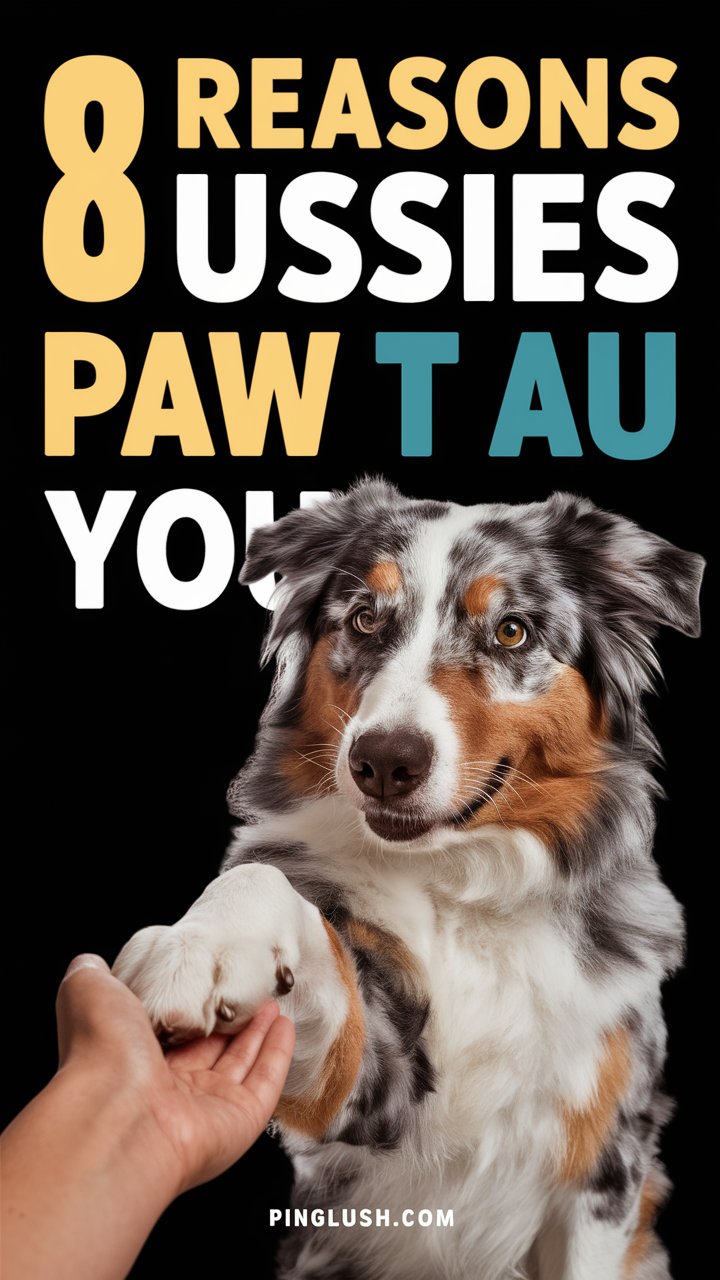
When your Australian Shepherd paws at you, it can melt your heart — until it becomes constant and slightly annoying. But here’s the truth: your Aussie isn’t misbehaving; they’re talking to you in their own way.
In this article, you’ll discover:
✅ The 8 real reasons your Aussie paws at you
🚨 When pawing signals something serious
🐕🦺 3 proven ways to reduce excessive pawing
❤️ How to strengthen your bond through communication
Let’s decode your dog’s adorable — and sometimes confusing — behavior.
🐶 Why Does My Australian Shepherd Paw at Me?
Australian Shepherds are highly intelligent, emotional, and people-oriented dogs. When they use their paws, it’s not random. Pawing is their natural way of communicating needs, emotions, and even empathy.
In canine communication, pawing can mean:
- “Pay attention to me.”
- “I need something.”
- “I’m worried about you.”
- Or sometimes simply, “I love you.”
Understanding these signals helps you respond better — and build a stronger relationship with your Aussie.
🔍 8 Real Reasons Your Australian Shepherd Paws at You
1️⃣ You Stopped Giving Attention
Aussies thrive on affection. If you’re petting or cuddling and suddenly stop, they might paw at you to say, “Hey, keep going!”
They remember which actions bring pleasure — so when petting stops, they use their paw as a gentle reminder.
💡 Tip: If you’re okay with it occasionally, enjoy it! But if it becomes frequent, calmly ignore the pawing and resume attention only when they settle down.
2️⃣ They Want Food or Water
Sometimes pawing means, “Hey, my bowl’s empty!”
Australian Shepherds are quick learners — if pawing gets them what they want once, they’ll try it again.
✅ What to do:
Before assuming it’s attention-seeking, check their food and water. Meeting basic needs first helps avoid confusion and reinforces trust.
3️⃣ They Need to Go Potty
When nature calls, Aussies can be subtle — until they’re ignored. If pacing or whining doesn’t get your attention, they’ll use their paw.
🦮 Training tip:
Every time they paw and you take them out, say the cue word “outside.” Over time, they’ll associate the word with the action and communicate clearly without excessive pawing.
4️⃣ They’re Saying “I’m Sorry”
After doing something wrong, like chewing a shoe or having an accident, your Aussie may paw at you as an apology.
Dogs often “offer a paw” because they know it earns positive reactions during training. So when they’ve made a mistake, they repeat it to show remorse.
❤️ Behavior note:
Respond calmly. Punishing them after they’ve shown submission can damage trust. Gentle redirection works best.
5️⃣ Boredom or Restlessness
Australian Shepherds are one of the most energetic dog breeds. Without proper stimulation, they’ll create their own entertainment — and pawing can become one of those outlets.
🚀 Signs of boredom:
- Pawing your arm constantly
- Bringing toys but not engaging long
- Whining or pacing indoors
💡 Solution:
Give them 60–90 minutes of daily exercise + 20 minutes of mental work (training, puzzle toys, scent games). A tired Aussie is a happy Aussie.
6️⃣ Seeking Comfort or Asking for Space
Sometimes, pawing is about closeness. Other times, it’s your dog politely saying, “I love you, but I need space right now.”
If your Aussie paws at you and then moves slightly away, it could mean they’re overstimulated, too warm, or simply tired.
🔎 Watch for body language:
Panting, lip licking, or turning away = “I need a break.”
Respecting these subtle cues builds trust and prevents anxiety-driven behavior later.
7️⃣ Anxiety or Stress
If pawing becomes constant, forceful, or desperate, it could signal anxiety.
Australian Shepherds are sensitive and often develop separation anxiety or fear-based habits.
⚠️ Look for:
- Excessive licking or pacing
- Whining, drooling, or trembling
- Destructive behavior when left alone
🐾 Solution:
Use consistent routines, gentle reassurance, and enrichment toys to calm anxiety. For severe cases, consult a vet or canine behaviorist.
8️⃣ They’re Reflecting Your Emotions
Your Aussie is emotionally intelligent — sometimes more than you realize.
If you’re stressed, sad, or anxious, they can sense it. Pawing becomes their way of comforting you, almost like a hug.
🧠 Scientific Insight:
Studies show dogs mirror their owner’s emotions via oxytocin synchronization — the same hormone that bonds parents with children.
So next time your Aussie paws during a bad day, it’s empathy in action.
🚫 Should You Stop Your Australian Shepherd from Pawing?
Not necessarily.
Occasional pawing is normal and affectionate. It only becomes an issue when:
- It’s too frequent or demanding
- It becomes rough or causes scratches
- It’s linked to stress or obsessive behavior
If your Aussie paws excessively, you can gently redirect the habit without punishment.
🧠 3 Proven Tips to Reduce Excessive Pawing
1️⃣ Stop Rewarding the Behavior
When you talk to, touch, or even push your dog away — that’s attention, which reinforces pawing.
✅ Try this instead:
- Ignore the pawing completely.
- Wait for calm behavior (no pawing).
- Reward that calmness with praise or a treat.
This method flips the reward system: your Aussie learns calm = attention, not pawing.
2️⃣ Give Them Enough Exercise & Stimulation
Aussies have energy to burn. If it’s not spent constructively, it turns into frustration or attention-seeking.
💡 Daily energy outlet ideas:
- Morning jog or long walk
- Frisbee or fetch in the park
- Hide-and-seek or obedience drills
- Agility or herding-style training
Keeping their mind and body active reduces unwanted behaviors naturally.
3️⃣ Check for Health or Emotional Issues
If pawing comes with excessive licking, chewing, or limping, your dog could be dealing with allergies, pain, or stress.
⚕️ When to see a vet:
- Sudden change in behavior
- Signs of discomfort or anxiety
- Pawing combined with aggression or restlessness
Your vet can rule out physical issues and guide you toward behavioral therapy if needed.
❤️ Final Thoughts: Decode, Don’t Discipline
Your Australian Shepherd isn’t trying to annoy you — they’re trying to connect.
Pawing is their version of “Hey, I need something” or “I’m here for you.”
👉 Remember:
- Communication > Correction
- Patience > Punishment
- Understanding > Frustration
By responding calmly and consistently, you’ll strengthen your bond — and transform pawing into positive communication that deepens trust and love.