
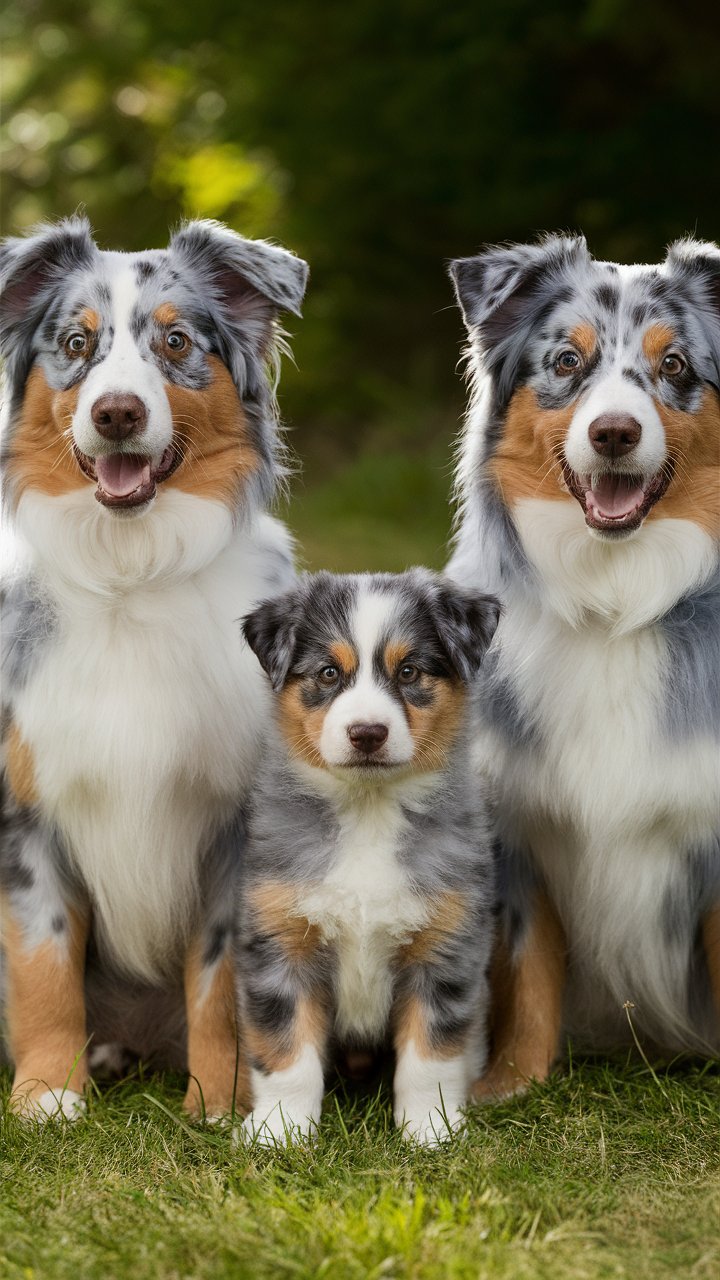
🐶 Ever caught your Australian Shepherd flashing a cheeky grin and wondered — “Is my dog actually smiling at me?”
You’re not alone! Many Aussie owners swear their dogs smile, and guess what? They’re not entirely wrong — but that adorable grin might not mean what you think it does.
Sometimes it’s pure joy, other times it’s imitation, and occasionally… it’s their polite way of saying, “Please don’t be mad, human.”
Let’s uncover the real reasons Australian Shepherds smile — and how you can tell the difference between happy, submissive, and warning smiles.
🧠 Do Australian Shepherds Smile Like Humans Do?
Not exactly — but close.
While humans smile to express happiness or friendliness, dogs use similar facial expressions as part of their body language communication system.
When your Aussie lifts their upper lip, exposes teeth, or curls their mouth corners upward, it’s not “laughing” in the human sense — but it is communication.
According to canine behaviorist Dr. Stanley Coren, smiling in dogs is often a learned social behavior — meaning your pup might’ve picked it up from you!
😄 5 Real Reasons Why Australian Shepherds Smile
Let’s decode your Aussie’s grin, one meaning at a time.
1. They’ve Been (Accidentally) Trained To Smile
You might have done this without realizing it.
Every time your dog showed their teeth playfully and you responded with hugs, excitement, or treats — boom 💥 you reinforced the behavior.
Now, your Aussie smiles because they learned it gets your attention and affection.
They’re people-pleasers by nature, and they quickly connect “smiling” with “making my human happy.”
🦴 Pro tip: Next time your dog flashes that grin, reward them with praise — you’ll see more smiles soon!
2. The Submissive (Appeasement) Smile
When your Aussie lowers their body, avoids eye contact, and gives a small, tight-lipped grin — they’re saying:
“I come in peace.”
This appeasement smile is a social signal dogs use to show respect or submission to someone they view as higher in the pack (you, guests, or other dogs).
🐕🦺 Watch for: Relaxed body, low tail, slow wag — these mean calm submission, not fear.
🚫 Be cautious if: Their ears are forward, eyes locked, and tail stiff. That’s not a smile — it’s a warning grin (aggression cue).
3. They Ate (or Licked) Something Sour
This one’s funny but true.
Ever seen your Aussie lick a lemon or something bitter? That sudden “grin” is their face reacting to the shock of the taste.
😝 It’s the canine equivalent of your “sour candy face.”
While hilarious, avoid using sour foods like lemons or vinegar to provoke reactions — they’re too acidic for dogs.
4. They’re Imitating You
Australian Shepherds are highly intelligent and emotionally attuned to their owners.
If your Aussie often sees you smiling and laughing, don’t be surprised when they start copying that behavior.
It’s not that they “understand” what smiling means — they just know your smile = positive energy, so they mirror it.
✨ It’s empathy in motion — your Aussie’s way of bonding with you.
5. The “Oops, I Messed Up” Smile
Guilty grin alert! 🚨
When your Aussie knows they’ve done something wrong — like chewing a shoe or jumping on the couch — they might flash a quick grin, lower their head, or even roll onto their back.
It’s their version of saying, “I know I messed up, please don’t be mad.”
🐾 This is a submissive smile, paired with apologetic body language (ears back, tail tucked, soft eyes).
💡 Remember: Never punish harshly here — they’re already trying to make peace.
⚠️ Bonus: The Angry or Defensive “Smile”
This isn’t really a smile — it’s a snarl.
When your Aussie feels cornered, threatened, or overly protective, they might lift their top lip to expose teeth.
🚫 Don’t confuse this with a happy grin. Look for signs like:
- Stiff body
- Growling
- Direct eye contact
- Raised hackles
If you notice these, calmly remove them from the situation and give space.
🎯 How To Train Your Australian Shepherd To Smile On Command
Want to turn your dog’s grin into a cute party trick? Here’s how to teach it safely and positively.
Step 1️⃣ – Pick a Command
Choose a fun cue word: “Smile!”, “Say cheese!”, or “Show me teeth!”
Step 2️⃣ – Capture the Expression
Find what naturally makes your dog lift their upper lip — for some, it’s whisker tickling; for others, a gentle cue with your finger.
Step 3️⃣ – Pair With Reward
When they raise their lip, immediately say the cue word and reward with a treat + praise.
Step 4️⃣ – Practice & Fade Out Help
Gradually reduce your physical cue until your dog smiles with the verbal command alone.
Step 5️⃣ – Reinforce Positivity
Always keep training upbeat and short (5–10 minutes max). If your Aussie seems confused or frustrated, take a break.
🎉 Within a week or two, you’ll have a dog that “smiles” on command — adorable for photos and heart-melting moments.
🧭 How To Tell What Your Aussie’s Smile Really Means
| Type of Smile | Emotion | Body Language | Meaning |
|---|---|---|---|
| Relaxed grin | Happy, playful | Loose body, wagging tail | “I’m content!” |
| Submissive smile | Respectful | Avoids eye contact, low ears | “I mean no harm.” |
| Guilty grin | Apologetic | Ears back, crouched | “Please forgive me.” |
| Defensive grin | Fear/aggression | Stiff, teeth bared | “Back off!” |
🐕 Expert Insight
“Australian Shepherds are among the most socially aware breeds. Their smiles reflect their emotional intelligence — a mix of learned behavior and pack communication.”
— Dr. M. Coren, Canine Behaviorist
💬 Final Thoughts: When Your Aussie Smiles, They’re Talking To You
Every grin tells a story — affection, apology, imitation, or warning.
The key is context: their body language, situation, and energy all paint the full picture.
Next time your Aussie flashes those pearly whites, look closer — you might just be seeing one of the most endearing forms of canine communication there is.