
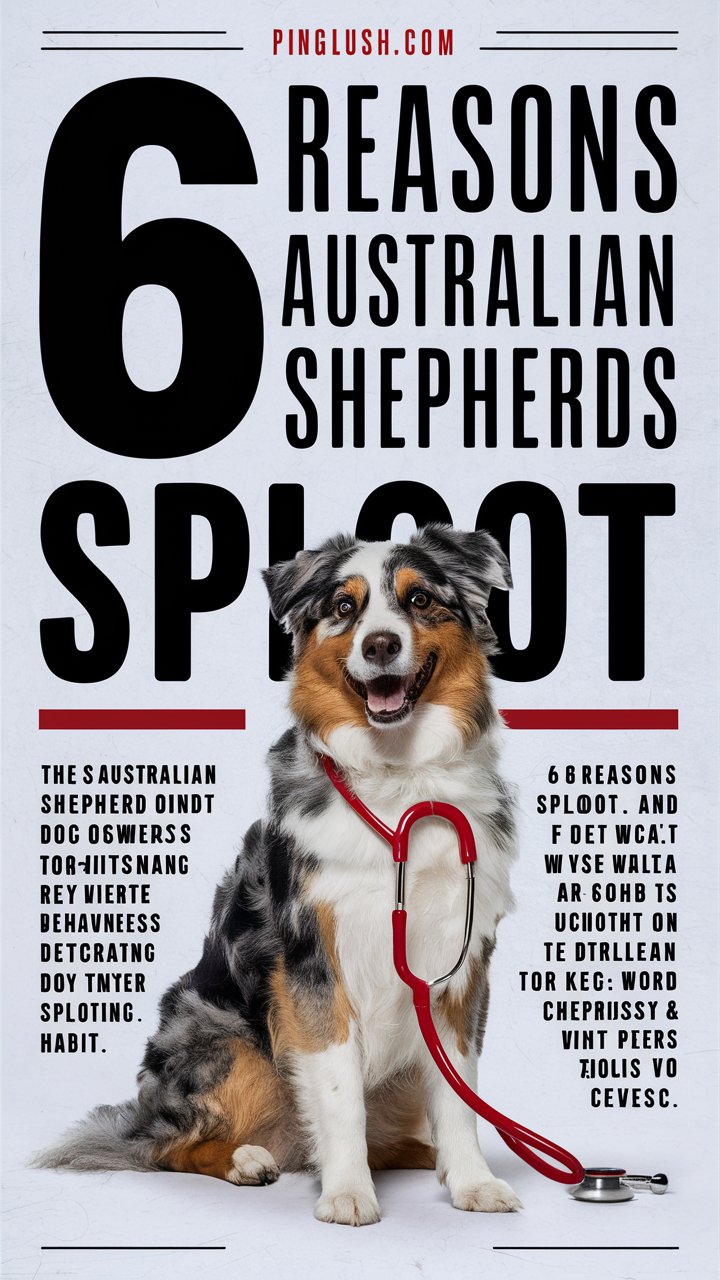
❤️ Ever Caught Your Aussie Lying Flat Like a Little Frog?
If you own an Australian Shepherd, you’ve probably seen that hilarious moment when they stretch out on the floor, back legs flat like a pancake, looking as proud as ever.
That adorable pose? It’s called a “sploot.”
But have you ever wondered why your Aussie sploots — or if it’s actually safe for them?
Let’s uncover the real reasons behind this quirky behavior, what it means for their health, and when to be concerned.
🐾 What Exactly Is “Splooting”?
“Splooting” is when your dog lays down with their belly on the floor and their back legs stretched straight behind them — like a frog.
It’s most common in flexible, energetic breeds like Australian Shepherds, Corgis, and Bulldogs, but every dog can do it.
To most owners, it’s just cute.
To vets, it’s a sign of joint flexibility, muscle health, and sometimes… hidden discomfort.
🔍 The Top 6 Reasons Why Australian Shepherds Sploot
1. It’s the Perfect Stretch After Playtime
Just like you stretch after sitting for hours, your Aussie loves to loosen up their muscles after a nap or run.
Splooting helps stretch their hips, thighs, and spine — especially after high activity.
It’s part comfort, part self-therapy.
👉 Quick Tip: If your Aussie sploots after exercise and looks relaxed, it’s completely normal.
2. They’re Still Young, Flexible, and Proud of It
Puppies sploot more because their joints are flexible and cartilage is still soft.
As they age, stiffness or joint discomfort can limit their ability to sploot.
So if your adult Aussie still enjoys splooting — congrats! That’s a sign of healthy hips and good muscle tone.
🩺 Vet Insight: According to the AKC, younger dogs use splooting as a natural stretch to maintain range of motion.
3. It’s Just So Comfortable (Especially on Cool Floors!)
When it’s hot outside, your Aussie’s thick double coat can trap heat.
By splooting on tiles or hardwood, they cool their belly and thighs — where dogs release heat the fastest.
It’s basically their version of a “chill mat.”
💡 Pro Tip: During summer, encourage splooting on shaded or cool surfaces — but avoid direct sun or hot concrete!
4. It Gets Your Attention (And It Works Every Time)
Let’s be honest — when your dog sploots, you laugh, take a photo, or give them attention.
They’ve learned that this pose equals love.
So some Aussies do it purely for your reaction.
🧠 Dogs are emotional learners — and your Aussie knows exactly how to make you smile.
5. They Learned It From Another Dog
Dogs often copy the behaviors of other dogs around them.
If your Aussie spends time with another splooter, don’t be surprised if they start doing it too.
It’s cute imitation — and a shared sign of relaxation.
🐕🦺 Fun Fact: Studies show dogs mimic their companions’ postures 70% of the time, especially during calm bonding moments.
6. To Cool Down or Relieve Light Discomfort
Sometimes splooting helps your dog soothe mild belly irritation or stretch sore joints.
If your Aussie sploots suddenly or more than usual, it might mean:
- Skin irritation or rash under the belly
- Minor hip stiffness after activity
- Early signs of fatigue or discomfort
If you notice limping, hesitation to get up, or whining — it’s vet time.
🩻 The 4 Common Types of Splooting
| Type | Description | Meaning |
|---|---|---|
| Classic Sploot | Belly down, both legs stretched behind | Comfort or cooling |
| Side Sploot | One leg out, one tucked | Mild stretch or tiredness |
| Upside Down Sploot | Belly up, paws in the air | Playfulness or attention-seeking |
| Half Sploot | One leg extended, one bent | Stiff hips or partial relaxation |
⚠️ 4 Hidden Dangers of Splooting Too Often
Most sploots are adorable — but not always harmless.
Here’s when it could mean trouble:
1. Hip Dysplasia
This hereditary issue causes joint misalignment.
If your Aussie struggles to stand after splooting, limps, or avoids stairs — see a vet immediately.
Unchecked splooting can worsen joint wear.
2. Early Arthritis
Excessive splooting puts pressure on the hip sockets.
Over time, this may increase stiffness and joint inflammation — especially in older dogs.
🩺 Pro Insight: Limit long sploot sessions for seniors and ensure soft bedding support.
3. Skin Irritation or Allergies
Splooting on rough or hot surfaces can irritate sensitive belly skin.
Check for redness, dryness, or bumps.
🧴 Tip: Use a cooling mat or clean blanket on hard floors to prevent friction burns.
4. Muscle Strain or Injury
If your dog seems hesitant to move after splooting or whimpers when standing — don’t ignore it.
It could be a strain or minor muscle pull.
Allow rest and get your vet’s advice before resuming activity.
🧠 Expert Tips to Keep Splooting Safe
- ✅ Provide non-slip, cool flooring like tiles or mats.
- ✅ Monitor splooting frequency — occasional is fine, excessive could mean discomfort.
- ✅ Add joint supplements (like glucosamine or fish oil) for active Aussies.
- ✅ Regular vet checkups = early detection of joint issues.
🐕 Final Thoughts
Splooting is one of the cutest quirks of the Australian Shepherd breed — and usually totally harmless.
It’s their way of stretching, cooling off, or just being adorable.
But understanding why they do it helps you spot early signs of discomfort and keep them healthy for years to come.
👉 Your Turn:
Does your Aussie sploot every day? Share your story or funniest photo in the comments below — we’d love to feature it in our next post!