
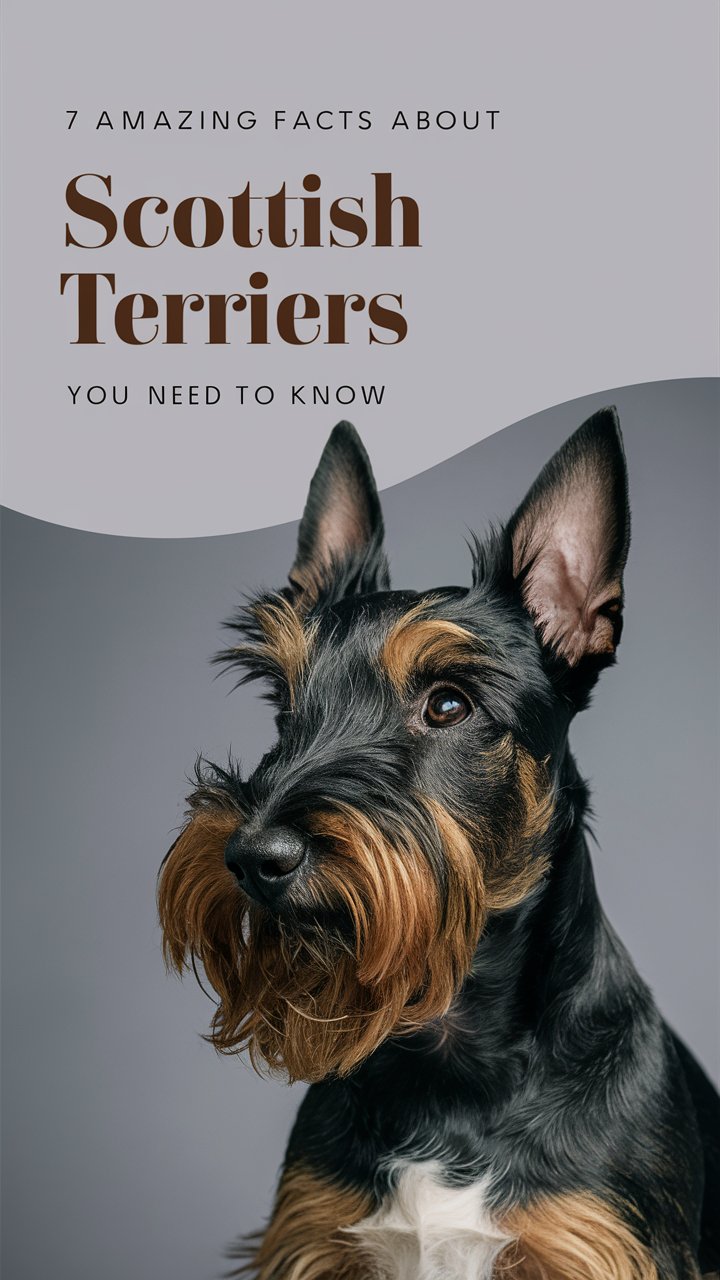
If you’ve ever seen a bold little dog with a dignified beard and confident stance, you’ve probably met a Scottish Terrier — affectionately known as the Scottie. This small yet powerful breed is famous for its independence, loyalty, and timeless charm.
Whether you’re planning to adopt one or simply want to learn more about these feisty pups, this complete guide covers everything — from their origins and behavior to grooming, health, and fun facts.
📖 Table of Contents
- Overview of the Scottish Terrier
- History & Origin
- Appearance and Unique Features
- Temperament and Personality
- Size, Growth, and Development
- Health and Common Issues
- Grooming and Coat Care
- Exercise and Training Needs
- Diet and Nutrition
- Breeding, Pregnancy, and Puppies
- Fun Facts about Scottish Terriers
- FAQs About Scottish Terriers
- Final Thoughts
🐕 Overview of the Scottish Terrier
Breed Group: Terrier
Height: 10–11 inches
Weight: 18–22 pounds
Life Expectancy: 12–14 years
Coat Type: Dense, wiry, double coat
Colors: Black, brindle, wheaten, silver brindle
The Scottish Terrier may be small in size, but their heart and courage are massive. Known for their independent thinking and sharp instincts, Scotties are fearless and make fantastic watchdogs.
🏴 History & Origin
The Scottish Terrier originated in the Scottish Highlands in the 19th century. Bred to hunt vermin, foxes, and badgers, their compact body and powerful legs made them exceptional diggers.
Originally developed from crosses of Cairn Terriers and West Highland White Terriers, they became officially recognized by the American Kennel Club in 1900.
Scotties soon became a symbol of dignity — even President Franklin D. Roosevelt had a Scottish Terrier named Fala, who became one of America’s most famous dogs!
✨ Appearance and Unique Features
Scottish Terriers are easily recognizable by their:
- Long beard and bushy eyebrows 🧔♂️
- Short, muscular legs
- Upright tail and confident gait
- Distinctive double coat — wiry on top, soft underneath
Their expressive eyes and dignified expression make them both adorable and regal.
💬 Temperament and Personality
Scotties are independent, bold, and deeply loyal. They’re not your typical “lap dogs” — they prefer to make their own decisions but are affectionate toward those they trust.
They’re also known for their stubborn streak, so early socialization and consistent training are crucial.
Best For:
✅ Families with older children
✅ Experienced dog owners
✅ People who appreciate confident, low-drama companions
📏 Size, Growth, and Development
- Puppy Growth: Scotties reach full size at around 18 months.
- Maturity: They calm down by age 2–3 years.
- Ear Development: Their iconic erect ears stand up by about 8 weeks.
They’re a small-to-medium breed but have big-dog confidence — don’t be surprised if your Scottie acts like they rule the house!
❤️ Health and Common Issues
Scottish Terriers are generally healthy but can be prone to certain conditions like:
- Scottie Cramp (a movement disorder)
- Allergies and skin irritation
- Joint issues (patellar luxation)
- Bladder cancer (transitional cell carcinoma)
🩺 Regular vet checkups, balanced nutrition, and joint-support supplements can extend their lifespan and improve their quality of life.
🧼 Grooming and Coat Care
Scotties have a double coat — a harsh outer layer and a soft undercoat. Grooming is essential to prevent tangling and skin issues.
Tips:
- Brush 3–4 times a week
- Hand-strip or trim every 2–3 months
- Bathe only when necessary (their coat repels dirt naturally)
- Clean their beard after meals to avoid odor buildup
🏃 Exercise and Training Needs
Despite their small size, Scottish Terriers are active and love mental stimulation.
They need at least 30–45 minutes of daily activity, including walks, playtime, and brain games.
🦴 Training Tip:
Because they’re independent, use positive reinforcement (treats, praise) instead of harsh correction. Patience is key!
🍗 Diet and Nutrition
Scotties thrive on high-protein, moderate-fat diets. Choose premium dog food with real meat like chicken, salmon, or lamb.
Supplements to consider:
- Omega-3s for coat health
- Glucosamine for joints
- Probiotics for digestion
Avoid feeding them table scraps or overly fatty foods to prevent obesity.
🐶 Breeding, Pregnancy, and Puppies
- Pregnancy Duration: 58–68 days (≈9 weeks)
- Litter Size: 4–6 puppies on average
- Puppy Care: Warm, clean bedding and early socialization are crucial for confident adult Scotties.
🎉 Fun Facts About Scottish Terriers
- Scottish Terriers are nicknamed “Diehard Dogs” for their bravery.
- They were featured as a Monopoly token — one of the game’s classics!
- Their beard isn’t just for style — it protected their face while hunting.
- They’re known for their unique “Scottie trot,” full of pride and purpose.
❓ Frequently Asked Questions
Q: Are Scottish Terriers good family dogs?
A: Yes, but best with older kids. They don’t tolerate rough play well.
Q: Do Scottish Terriers bark a lot?
A: They can be vocal, especially as watchdogs, but training can control this.
Q: How often should you groom a Scottish Terrier?
A: Weekly brushing + professional trimming every 2–3 months.
Q: Do Scottish Terriers shed a lot?
A: No, they’re low-shedding — great for allergy-sensitive owners!
🐾 Final Thoughts
Scottish Terriers are the perfect mix of independence, loyalty, and charm. They may be small, but their presence fills a room. With proper care, training, and love, they make lifelong companions who’ll protect and adore you for years.
If you’re ready for a confident, proud, and loving dog — the Scottish Terrier might just be your perfect match. 💖