
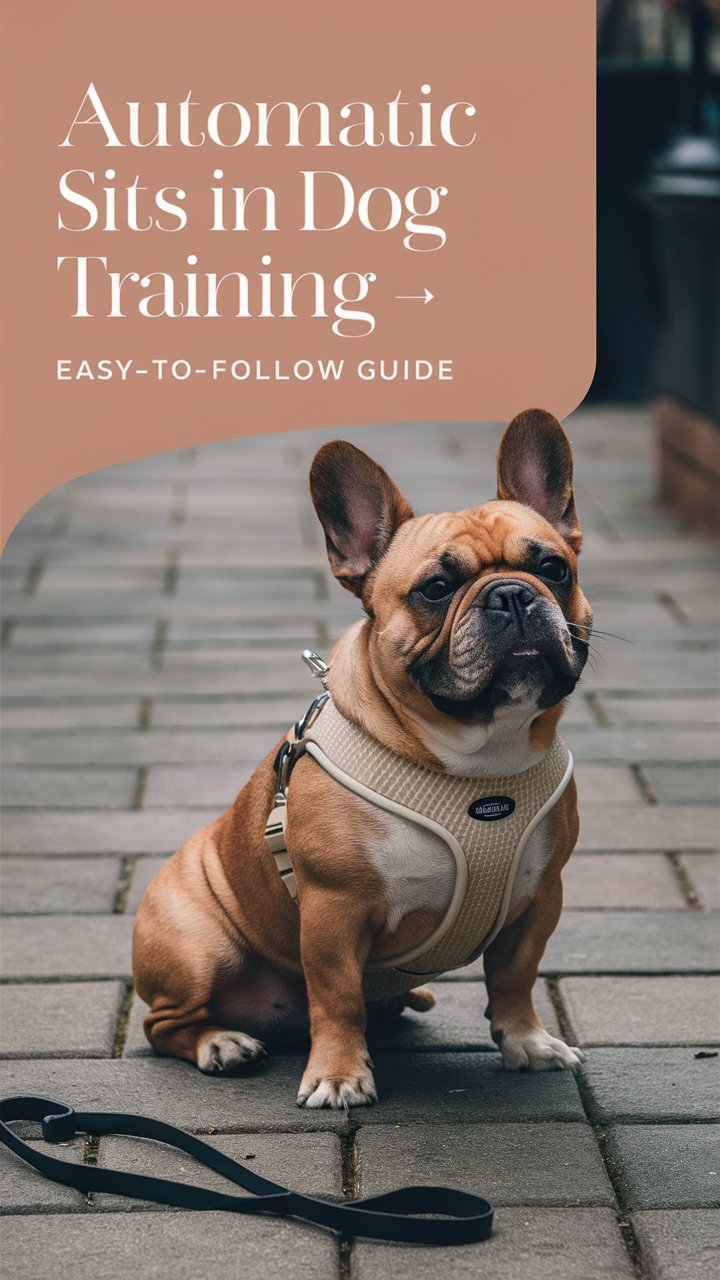
Teaching your dog to sit might seem simple—but it’s much more than just a trick.
It’s the foundation of good behavior. A dog that knows how to sit politely is easier to manage at the door, ignores distractions more easily, and is far more likely to succeed with more advanced training later on (like stay, heel, and recall).
In fact, many trainers consider “sit” to be the first step towards impulse control.
This guide will walk you through everything you need to know—whether you’ve got a hyper 10-week-old puppy or an older rescue dog that’s starting from scratch.
✅ Bonus: Want a printable Puppy Training Checklist?
Just reply “Yes, send the checklist” and I’ll include it for free in the next message.
🐾 Why the Sit Command Matters
- Keeps your dog focused and calm in busy places
- Makes it easier to control your dog in public
- Builds a habit of listening before acting
- Helps with leash training, door manners and stay command
- Strengthens the bond and communication between you and your dog
✅ Step 1 – Get Your Dog’s Attention
Training only works when your dog is focused on you.
Take a high-value treat (something soft and smelly works best) and hold it near your dog’s nose. Once they lock their eyes on you, you’re ready to move on.
🔎 Tip: If your dog keeps looking away or sniffing the ground, move to a quieter area with fewer distractions.
✅ Step 2 – Use the Lure
Slowly move the treat up and slightly back over your dog’s head.
Most dogs will naturally lift their head and lower their hind end to keep balance.
The moment your dog’s butt touches the ground → say “Yes!” (or click your clicker if you use one) to mark the behavior.
Immediately give the treat.
❗ Don’t say the word “sit” yet — they don’t know what it means at this stage.
✅ Step 3 – Repeat and Add the Verbal Cue
Repeat Step 2 several times until your dog is consistently lowering into a sit with just the lure.
Once that happens:
- Say “Sit” (clear and friendly voice)
- Lure them into the position
- Mark (Yes!) + reward
Repeat this process 5–6 times per session.
✅ Step 4 – Fade the Treat
Now slowly remove the food lure and use an empty hand signal instead.
✅ Say “Sit”
✅ Raise your empty hand into the same motion
✅ When your dog sits → mark and reward (you can still give a treat, but show it after)
This teaches your dog that “Sit” + hand signal = reward, not just “follow the treat”.
🔁 Practice in Different Places
Once your dog is responding to the cue in one room, repeat the steps in:
- The backyard
- The front door
- During walks (stop → ask to sit → continue walking as the reward)
- At the park
Dogs don’t generalize well—so new location = new learning opportunity!
⚠️ Common Mistakes (and How to Fix Them)
| Problem | Solution |
|---|---|
| Dog keeps jumping | Move the treat slower and lower – you may be holding it too high |
| Dog walks away | Use a leash at first to keep them close and focused |
| Dog only sits with food | Start rewarding with praise or toys 50% of the time |
| Dog doesn’t sit in busy areas | Go back to a quiet area and build up slowly with small distractions |
🙋♂️ FAQ: Training the Sit Command
How long does it take for a dog to learn sit?
Most dogs understand the basic motion in 5–15 minutes. Full mastery (in different places and without treats) can take several days of short sessions.
Can I use dry kibble instead of treats?
Yes—if your dog finds it motivating. Otherwise use a higher value food for the first few sessions.
How many times per day should I practice?
2–3 short sessions a day (5–10 minutes each) is ideal. Always end on a success.
What if my dog already knows how to sit but ignores me outside?
That means they haven’t generalized the command. Start again outside at a distance, use high-value rewards and rebuild the association.