
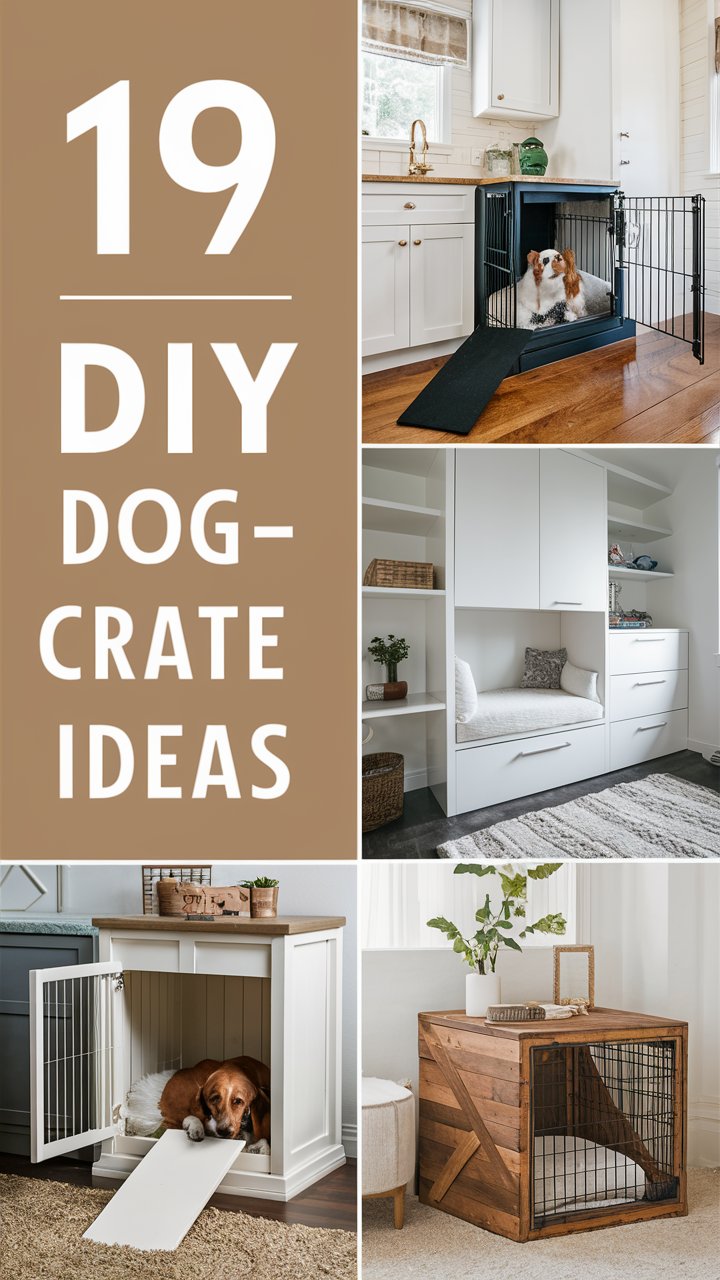
If you’re tired of those clunky, unattractive wire dog crates ruining the vibe of your living room, you’re not alone. A dog crate doesn’t have to be an eyesore—it can actually become a beautiful, functional piece of furniture that blends seamlessly into your home décor.
By building your own DIY wooden dog crate, you’re not just creating a cozy den for your pup—you’re also crafting a custom furniture piece that fits your space, matches your style, and often costs less than buying one from a store.
In this guide, we’ll walk you through how to build a dog crate that doubles as furniture—safe, stylish, and tailored to your dog’s needs. We’ll cover step-by-step instructions, safety tips, customization ideas, and pro-level finishing touches.
🛠 Before You Start: Important Notes
- Safety First: Always use non-toxic, pet-safe paints, stains, and sealants. Dogs may chew or lick surfaces, so avoid harsh chemicals.
- Sizing: Measure your dog properly—your crate should be tall enough for them to stand up and wide enough to turn around comfortably.
- Ventilation: Don’t skimp on airflow. Dowels, slats, or open panels are essential for your dog’s comfort.
- Time & Skill Level: This project takes around 6–8 hours spread over 2–3 days (to allow for drying time). Skill level: Beginner to Intermediate woodworking.
- Cost Estimate: Depending on materials and finish, expect to spend around $120–$250—still cheaper than most quality furniture-style crates.
Step 1: Decide on Dimensions & Gather Materials
The first step is measuring your dog (and your space). Use your pup’s favorite bed or a plastic crate liner as a guide to ensure comfort without wasting floor space.
Materials List:
- Plywood for main body panels
- Pre-primed pine boards (or solid hardwood for a luxe look)
- 3/8-inch wooden dowels (for rails/ventilation)
- Pocket hole screws + wood glue
- Hinges & latch for the door (magnetic catch or surface bolt)
- Edge banding for clean finishes
- Pet-safe paint, stain, and clear coat
- Sandpaper (medium + fine grit)
- Tools: circular saw, miter saw, drill, clamps, roller brush, and rubber mallet
💡 Pro Tip: Choose a latch that your clever pup can’t nudge open. Magnetic catches are neat, but chewers may need a sturdier lock.
Step 2: Build the Cabinet Box (Main Crate Body)
Think of this step like building a cabinet:
- Cut Panels: Use plywood for the sides, bottom, and top.
- Assemble: Drill pocket holes and attach the side panels to the bottom. Add support strips along the top edges.
- Optional Toe Kick: For a furniture-style finish, add a thin plywood strip at the base.
✨ Advanced Touch: Use edge banding to cover plywood edges for a polished, store-bought look.
Step 3: Create the Face Frame & Door
This is where the crate transforms from “box” to “furniture.”
- Cut Frames: Use pine boards to build a stationary front frame and a matching door frame.
- Add Dowels for Ventilation: Drill evenly spaced holes for dowels. Use a dowel jig for precision.
- Paint Before Assembly: Trust us—paint or stain your frames and dowels before gluing. This prevents awkward brushwork later.
- Assemble Door: Attach pieces with wood glue and dowels. Use pocket screws on hidden sections of the stationary frame.
Step 4: Sand, Paint & Finish
This step makes your project both safe and stylish.
- Sand Smooth: Round off any sharp edges to prevent injuries.
- Apply Primer + Paint or Stain: Choose a color that blends with your home. White, walnut, and black are popular choices.
- Seal with Pet-Safe Clear Coat: Protects against scratches, spills, and “oops moments.”
💡 Pro Tip: Use a water-based polyurethane—it’s low-odor, fast-drying, and safer for pets.
Step 5: Assemble the Frames & Door
Now it’s time to put it all together:
- Attach the stationary frame to the crate body with glue and brad nails.
- Install the door with hinges, ensuring smooth movement.
- Add a secure latch or magnetic catch.
Step 6: Attach the Top Panel & Add Final Touches
Cut and finish the top panel to match your frame. Secure it with screws into the support strips.
For a stylish furniture vibe:
- Add handles or decorative trim.
- Style the top as a side table or entryway console with books, plants, or lamps.
Bonus Customization Ideas
- For Chewers: Reinforce dowels with metal rods or use hardwood slats.
- For Messy Pups: Line the bottom with a waterproof, removable tray.
- For Multi-Dog Homes: Build a double crate with a divider in the middle.
- For Small Spaces: Make a crate that doubles as a nightstand or coffee table.
Final Thoughts
Building your own DIY dog crate is more than a woodworking project—it’s about creating a safe, comfortable den for your pup while adding a stylish piece of furniture to your home. With careful planning, safe materials, and a little patience, you’ll end up with a crate that looks store-bought but carries the love and craftsmanship only you could give.