

By David
Updated: July 2025
Introduction: Why Homemade Dog Food Matters More Than Ever
In a world where most commercial dog food contains synthetic preservatives, by-products, and filler ingredients, more pet parents are switching to homemade meals to ensure their dogs live long, vibrant lives. Feeding your dog shouldn’t feel like a guessing game. You deserve to know exactly what’s going into their bowl—and your dog deserves meals that are just as nourishing as they are delicious.
This guide will take you step by step through making the ultimate chicken stew for dogs—vet-friendly, nutrient-dense, and designed with real canine health in mind. Whether you’re a first-time dog food maker or a long-time canine chef, this recipe and its variations will transform mealtime in the best way possible.
Table of Contents
- Why Homemade Dog Food?
- Key Benefits of Chicken Stew for Dogs
- Ingredients and Nutritional Benefits
- Step-by-Step Cooking Instructions
- Storage & Serving Guidelines
- Customization Tips (Grain-Free, Senior Dogs, Sensitive Stomachs)
- Common Mistakes to Avoid
- Expert Tips for Homemade Dog Food Success
- Frequently Asked Questions (FAQs)
- Final Thoughts
1. Why Homemade Dog Food?
a) You Know What’s In It
One of the most compelling reasons for making your own dog food is ingredient transparency. Unlike commercial kibble—which often contains vague ingredients like “meat meal” or “animal digest”—homemade dog stew includes whole, identifiable ingredients.
b) It’s Tailored to Your Dog’s Needs
Every dog is unique. Some are allergic to grains; others may have sensitive stomachs or need low-fat diets. When you cook at home, you can adapt the recipe to meet your dog’s individual health needs.
c) Avoiding Fillers and Artificial Additives
Even some of the most expensive dog foods contain unnecessary additives that may trigger allergies or digestive issues. Homemade stew avoids:
- Corn and soy fillers
- Artificial coloring
- Synthetic preservatives
- Over-processed meat by-products
2. Key Benefits of Chicken Stew for Dogs
Chicken stew is a fantastic entry-level recipe for dog food beginners. Here’s why it works so well:
- Protein-Rich: Chicken is a lean, high-quality protein source.
- Easy to Digest: Cooked vegetables and soft textures are gentle on your dog’s digestive tract.
- Versatile: You can mix and match vegetables or add healthy grains depending on your dog’s dietary tolerance.
- Hydrating: The broth helps maintain hydration, especially in dogs that don’t drink enough water.
3. Ingredients and Their Nutritional Benefits
Before diving into the recipe, let’s explore the ingredients and why they’re ideal for dogs:
| Ingredient | Nutritional Benefit |
|---|---|
| Chicken Breast/Thighs | Lean protein, supports muscle development |
| Carrots | High in beta-carotene, good for eye health |
| Sweet Potatoes | Fiber-rich, aids digestion and adds natural sweetness |
| Green Beans | Low in calories, high in vitamins like A, C, and K |
| Peas | Source of plant-based protein and minerals |
| Low-Sodium Broth/Water | Adds moisture without excess salt |
| Olive or Coconut Oil | Supports skin and coat health |
| Turmeric (optional) | Natural anti-inflammatory, good for aging joints |
| Brown Rice or Quinoa (optional) | Energy-providing complex carbs |
| Parsley (curly only) | Breath freshener and detoxifier |
| Flaxseed (optional) | Rich in Omega-3s for brain and coat health |
⚠️ Important Note: Never use onions, garlic, or Italian parsley. These are toxic to dogs.
4. Step-by-Step Cooking Instructions
🧑🍳 Step 1: Cook the Chicken
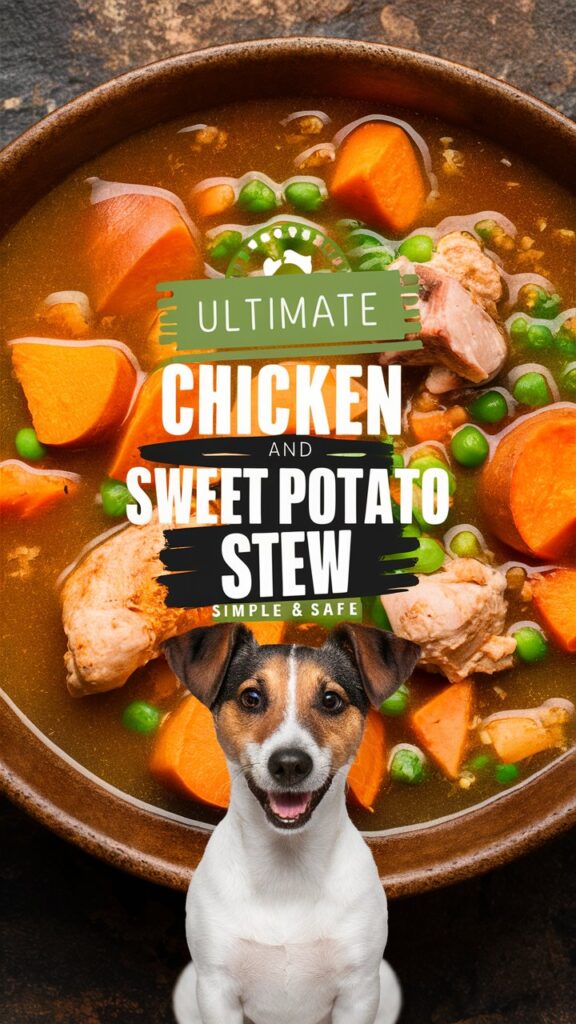
- Place 2 chicken breasts or 3–4 chicken thighs (boneless and skinless) in a large pot.
- Add 4 cups of water or low-sodium chicken broth.
- Bring to a boil, then reduce to simmer for 15–20 minutes, or until fully cooked.
- Remove and shred with forks (or hands once cooled).
🥕 Step 2: Add the Vegetables
- While the chicken is cooking, chop your veggies:
- 1 cup carrots
- 1 cup sweet potatoes
- ½ cup green beans
- ½ cup peas
- Add vegetables to the same broth after removing the chicken.
- Simmer for 10–15 minutes, until veggies are tender but not mushy.
🫕 Step 3: Combine & Finish
- Return shredded chicken to the pot.
- Add:
- 1 tbsp olive or coconut oil
- ½ tsp turmeric (optional)
- ½ cup cooked brown rice or quinoa (optional)
- ¼ cup finely chopped curly parsley
- A pinch of ground flaxseed (optional)
- Stir everything together and allow it to cool before serving.
5. Storage & Serving Guidelines
How Much Should You Feed?
| Dog Size | Approx. Serving |
|---|---|
| Small (<20 lbs) | ½ – 1 cup per meal |
| Medium (20–50 lbs) | 1 – 1.5 cups per meal |
| Large (50+ lbs) | 2 – 2.5 cups per meal |
Tip: Adjust based on your dog’s age, weight, and activity level.
Storage Instructions:
- Fridge: Up to 4 days in airtight containers.
- Freezer: Up to 3 months. Use freezer-safe bags or portion containers.
- Reheating: Gently warm (not hot!) in a microwave or pan.
6. Customization Tips (For Special Diets)
✅ Grain-Free Version
Replace rice with:
- Extra sweet potatoes
- Cooked lentils (small amount)
- Cauliflower or pumpkin
✅ Senior Dog Variation
Add:
- Bone broth instead of regular broth
- Extra turmeric
- A pinch of glucosamine supplement (vet-approved)
✅ For Dogs With Allergies
Skip chicken and use:
- Lean ground turkey
- Duck or salmon (cooked and deboned)
✅ For Sensitive Stomachs
- Use fewer vegetables at first
- Stick to boiled chicken and sweet potato
- Introduce new ingredients slowly
7. Common Mistakes to Avoid
| Mistake | Why It’s a Problem |
|---|---|
| Using onions or garlic | Both are toxic to dogs |
| Not letting stew cool | Can burn your dog’s mouth |
| Overfeeding | Leads to weight gain |
| Poor storage | Spoiled food = sick dog |
| Relying on homemade food only | Needs to be balanced with vet consultation |
8. Expert Tips for Homemade Dog Food Success
- Batch Cooking is Your Friend: Double or triple the recipe and freeze in weekly portions.
- Use Silicone Molds: Great for freezing single servings.
- Add Variety: Rotate protein sources to avoid dietary gaps.
- Vet Consultation: Always consult your vet when switching to a fully homemade diet.
- Supplements: Ask your vet about multivitamins for homemade-fed dogs.
9. Frequently Asked Questions (FAQs)
Q1: Can I add salt or seasoning?
No. Dogs don’t need added salt or human seasonings. Many common spices are harmful to pets.
Q2: Can I use leftover chicken from my meal?
Only if it’s plain and unseasoned. Avoid using anything cooked with onions, garlic, or rich sauces.
Q3: Is this meal suitable for puppies?
You’ll need to adjust the portion size and confirm with your vet—it may not meet a growing puppy’s full nutritional requirements.
Q4: Can I make it in a slow cooker?
Absolutely! Add all ingredients and cook on low for 6–8 hours or high for 3–4 hours.
10. Final Thoughts: A Bowl Full of Love
Making homemade dog food may seem like a lot of effort at first—but it’s really a small act of love with big rewards. With this chicken stew recipe, you’re not only feeding your dog—you’re enriching their health, improving their digestion, boosting their energy, and showing them love in the most nourishing way.
If dogs could talk, they’d say:
“Thank you for feeding me real food that doesn’t come from a bag.”
But since they can’t, expect some extra tail wags, licks, and maybe a few happy barks.