
By David
Published: February 10, 2025
Does your cat struggle with digestive issues or food sensitivities? You’re not alone. Many cats suffer from upset stomachs, food allergies, or intolerances, making it challenging to find meals that are both gentle and nutritious.
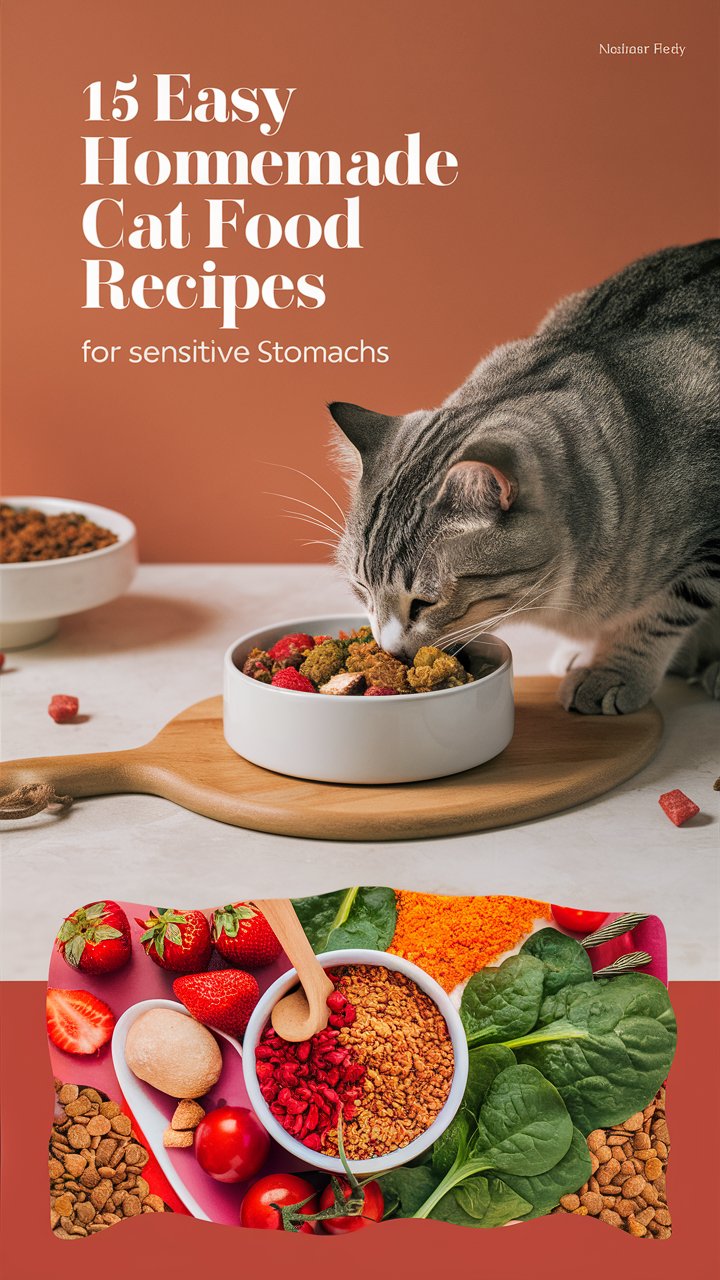
This guide offers six vet-informed, homemade cat food recipes specifically crafted for sensitive stomachs. Each recipe uses easily digestible ingredients to support gut health, maintain energy, and keep your cat’s coat shiny and skin healthy.
🐾 Note: Always consult your veterinarian before switching your cat’s diet, especially if they have known allergies or chronic conditions.
1. Chicken & Pumpkin Digestive Blend
A soothing and fiber-rich combo, this recipe supports both digestion and hydration.
Ingredients:
- 1 cup cooked, skinless chicken (shredded)
- ¼ cup plain canned pumpkin (no sugar or spices)
- ¼ cup low-sodium chicken broth
Benefits:
- Chicken: Lean, easily digestible protein
- Pumpkin: Rich in fiber to support digestive regularity
Instructions:
- Cook and shred the chicken.
- Mix with pumpkin and broth until smooth.
- Serve at room temperature. Store in the fridge for 2–3 days.
💡 Pro Tip: If your cat prefers smoother textures, blend all ingredients to a fine purée.
2. Turkey & Rice Recovery Meal
Ideal for cats recovering from stomach upset, this mild recipe is packed with gentle nourishment.
Ingredients:
- ½ cup lean ground turkey (cooked, unseasoned)
- ¼ cup plain white rice (fully cooked)
- 1 tsp olive oil (optional for moisture)
Benefits:
- Turkey: Hypoallergenic and low-fat
- Rice: Gentle on the stomach and easy to digest
Instructions:
- Fully cook turkey and rice separately.
- Combine with a dash of olive oil if needed.
- Serve slightly warm or at room temperature.
3. Salmon & Sweet Potato Omega Bowl
This recipe combines skin-supporting fats with vitamin-rich sweet potatoes.
Ingredients:
- ½ cup cooked, boneless salmon (no seasoning)
- ¼ cup mashed sweet potato (cooked)
- 1 tbsp water or chicken broth
Benefits:
- Salmon: Rich in omega-3s, supports skin & coat health
- Sweet potato: Gentle carb, loaded with vitamins A & C
Instructions:
- Cook and flake salmon.
- Mix with mashed sweet potato and broth.
- Serve at room temperature. Store for up to 3 days.
⚠️ Caution: Feed fish in moderation to prevent nutrient imbalance.
4. Beef & Carrot Comfort Stew
A hearty, nutrient-rich option for active or underweight cats needing a protein boost.
Ingredients:
- ½ cup lean ground beef (cooked, drained)
- ¼ cup finely chopped or mashed carrots (cooked)
- ¼ cup low-sodium beef broth
Benefits:
- Beef: High-protein and energy-dense
- Carrots: Provide beta-carotene, good for vision and immunity
Instructions:
- Cook beef and carrots thoroughly.
- Mix well with broth for a stew-like consistency.
- Serve warm. Refrigerate leftovers up to 3 days.
5. Tuna & Quinoa Protein Bowl
A gluten-free, protein-rich option for sensitive felines needing a light yet filling meal.
Ingredients:
- ½ cup canned tuna in water (no salt)
- ¼ cup cooked quinoa (plain)
- 1 tbsp water or broth
Benefits:
- Tuna: High in protein and B vitamins
- Quinoa: Easily digestible plant-based carb, high in fiber
Instructions:
- Drain tuna and flake it.
- Mix with cooled, cooked quinoa and a splash of liquid.
- Serve at room temperature.
⚠️ Reminder: Tuna should not be a daily staple due to mercury content.
6. Egg & Spinach Scramble
Perfect for a quick, nutritious meal, especially for cats who need added iron or lighter fare.
Ingredients:
- 1 egg (cooked, unseasoned)
- 1 tbsp cooked spinach (chopped)
- 1 tsp olive oil (optional)
Benefits:
- Egg: High-quality, bioavailable protein
- Spinach: Rich in iron and antioxidants (safe in moderation)
Instructions:
- Cook egg in a non-stick pan (no oil or butter).
- Mix in finely chopped cooked spinach.
- Cool slightly before serving. Store up to 2 days.
FAQs About Homemade Cat Food for Sensitive Stomachs
1. Can I feed these recipes every day?
These recipes can be used several times a week, but a fully balanced commercial or vet-formulated diet should remain the foundation unless a vet advises otherwise.
2. How do I identify food sensitivities in my cat?
Watch for symptoms like frequent vomiting, diarrhea, flatulence, itchy skin, or refusal to eat. Always consult a vet for diagnosis.
3. Can I freeze homemade cat food?
Yes. Freeze portions in airtight containers for up to 2 months. Defrost in the refrigerator and serve at room temperature.
4. Are raw ingredients safe?
No. Raw meat may contain bacteria like Salmonella or E. coli. Always cook meat thoroughly for safety.
5. How much should I feed my cat?
General guideline: 20–30 calories per pound of body weight per day. Adjust based on age, activity, and health status.
6. What ingredients should I avoid?
Never use onions, garlic, chocolate, grapes, raisins, alcohol, or anything seasoned/salted. They are toxic to cats.
Final Thoughts
Homemade meals for cats with sensitive stomachs can be a game-changer—when done right. These recipes are simple, balanced, and made with love. Always monitor your cat’s response to new foods and consult your vet regularly to ensure their nutritional needs are fully met.
Whether you’re easing your feline friend through a stomach flare-up or simply giving them a break from processed kibble, these recipes offer both comfort and health in every bite.