
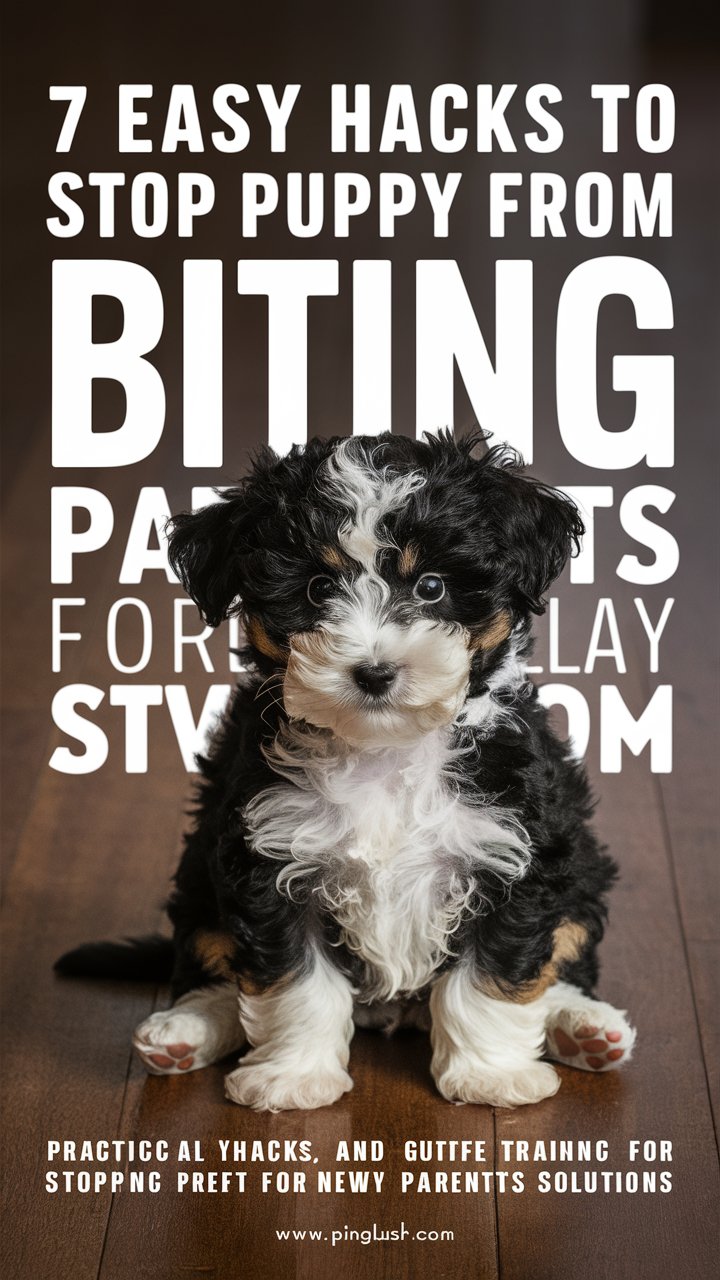
So, you finally brought home that little ball of fluff you’ve been dreaming about. You imagined cuddles on the couch, cute puppy selfies, and long walks in the park.
But reality? Your puppy has razor-sharp teeth, and your hands, ankles, and even your furniture are under daily attack. Suddenly, you’re typing into Google: “How to stop my puppy from biting everything?”
Sound familiar? Don’t panic—you’re not alone. Puppy nipping is completely normal. The great news? With the right hacks, you can stop this behavior quickly and raise a polite, well-mannered dog.
In this complete guide, you’ll discover 7 proven hacks (plus advanced training techniques, vet-backed advice, and real-life tips) that will help you transform your nippy little monster into a gentle, loving companion.
Let’s dive in.
Why Puppies Nip (And Why It’s Totally Normal)
Before we fix the problem, it’s important to understand why puppies nip. Spoiler: It’s not because they hate you.
✅ Teething pain – Just like human babies, puppies go through teething (usually between 3–6 months of age). Chewing and nipping helps relieve that discomfort.
✅ Play behavior – In a litter, puppies play-bite with siblings. If they bite too hard, their sibling yelps and walks away—teaching bite inhibition. With you, they’re just continuing the same game.
✅ Exploring the world – Puppies use their mouths to learn about their environment, much like toddlers who touch everything.
✅ Pent-up energy – A tired puppy is less bitey. If your pup is bouncing off the walls, expect more nipping.
👉 Bottom line: Nipping is a phase. But without proper training, it can develop into a bad habit. That’s why you need consistent techniques to guide your pup into gentle behavior.
Hack #1: The “Yelp” Trick (Teach Bite Inhibition Naturally)
This classic method works because it mimics how puppies learn from littermates.
- The next time your pup chomps down too hard, let out a sharp “Ouch!” or “Yipe!” in a high-pitched voice.
- Stop playing immediately and pull your hand away.
- Ignore your puppy for 10–15 seconds.
Puppies quickly learn that biting too hard = end of fun.
⚡ Pro Tip: If your puppy gets more excited by the yelp (some do), skip the sound and calmly walk away instead.
❌ What not to do: Never hit, flick, or shove your puppy. Physical punishment creates fear and damages trust.
Hack #2: Redirect to Toys (Because Puppies Need to Chew)
Your puppy isn’t “bad”—they just need appropriate outlets for chewing.
Keep a basket of chew toys handy in every room. When your pup nips your fingers, calmly say “No bite—take this” and offer a toy.
Great options include:
- ✅ Frozen KONGs stuffed with peanut butter or yogurt (soothes teething gums).
- ✅ Durable chew toys like Nylabone or Benebone.
- ✅ Rope toys for supervised tug-of-war.
⚡ Advanced Hack: Rotate toys every few days. Puppies get bored quickly—novelty keeps them engaged.
Hack #3: Teach the “Gentle” Command
Training bite inhibition through commands sets lifelong boundaries.
- Hold a treat in your closed hand.
- Let your puppy sniff or lick. If they nip, keep your hand closed.
- The moment they lick softly or stop biting, say “Gentle” and reward.
- Repeat until “Gentle” = soft mouth.
⚡ Pro Tip: Practice daily. This command is a lifesaver when kids or guests are involved.
Hack #4: Exercise, Exercise, Exercise (Tired Puppies Don’t Bite)
A huge reason puppies nip is excess energy. Boredom = mischief.
Daily exercise reduces biting dramatically:
- 🐾 Short, age-appropriate walks.
- 🐾 10–15 minutes of fetch in the yard.
- 🐾 Tug-of-war with a chew-safe toy.
- 🐾 Brain games (like puzzle feeders or snuffle mats).
⚡ Mental stimulation = physical exhaustion. A puppy who solves puzzles is less likely to chew on you.
Hack #5: The Time-Out Method
If your puppy won’t stop biting despite redirection, it’s time for the silent treatment.
- When nipped, calmly say “No bite.”
- Stand up and leave the room for 20–30 seconds.
- Return and resume calm play.
Your puppy learns: Biting = loss of attention. And trust me, for a social puppy, that’s the ultimate punishment.
⚡ Pro Tip: Be consistent. If you sometimes allow play biting, your pup will get confused.
Hack #6: Try Dog-Safe Bitter Sprays (Last Resort)
If you’ve tried everything and your pup still prefers your hands, a taste deterrent may help.
- Spray a dog-safe bitter solution (like “Bitter Apple Spray”) on your skin or clothing.
- After a few licks, your puppy will find you less appealing.
⚠️ Caution: Always test a small area first to ensure no allergic reaction.
Hack #7: Patience and Consistency (The Secret Ingredient)
Training takes time. Some puppies stop nipping in weeks, others take months. The key is:
- ✅ Stay consistent with rules (everyone in the family must follow them).
- ✅ Reward good behavior immediately.
- ✅ Be patient—your puppy is learning every day.
Remember: This phase will pass. Your puppy isn’t being “bad”—they’re being a puppy.
Bonus Advanced Training Tips (For Faster Results)
Want to level up your training beyond the basics? Try these advanced hacks:
1. Clicker Training
Pair a clicker with rewards. Every time your pup plays gently, click and treat. Clicker training builds precise behavior control.
2. Crate Training
A crate isn’t punishment—it’s a safe zone. When your puppy is overstimulated and biting too much, guide them into the crate with a chew toy for quiet time.
3. Enroll in Puppy Classes
Supervised puppy play teaches bite inhibition faster. Plus, you’ll get professional trainer guidance and socialization benefits.
Common Mistakes Dog Owners Make (And How to Avoid Them)
❌ Yelling or punishing harshly – creates fear, not learning.
❌ Inconsistency – sometimes allowing biting, sometimes scolding = confusion.
❌ Ignoring exercise needs – a bored puppy will always find mischief.
❌ Using hands as toys – never wrestle with bare hands, it encourages biting.
FAQs About Puppy Nipping
Q: At what age do puppies stop nipping?
Most puppies outgrow biting by 6–8 months, but consistent training speeds up the process.
Q: Should I punish my puppy for biting?
No. Positive reinforcement works far better than punishment.
Q: Is nipping worse in certain breeds?
Yes—herding breeds (Border Collies, German Shepherds) tend to nip more because of their instincts.
Q: Can professional training help?
Absolutely. A certified trainer can spot mistakes you might not notice and speed up results.
Final Puppy Training Checklist
- ✅ Use the “Yelp” method for bite inhibition.
- ✅ Redirect biting to chew toys.
- ✅ Teach the “Gentle” command.
- ✅ Exercise daily (physical + mental).
- ✅ Give time-outs for excessive biting.
- ✅ Use bitter sprays if needed.
- ✅ Stay patient and consistent.
Conclusion: From Shark Teeth to Sweet Puppy
Your puppy’s nipping may feel endless now, but with the right strategies, you can turn those razor-sharp bites into gentle kisses.
Remember: nipping is temporary, but training lasts a lifetime.
Stay calm, be consistent, and before you know it, you’ll have the well-mannered, cuddly companion you dreamed of. 🐾