
(Pawscessories is reader-supported. When you buy via links on our site, we may earn an affiliate commission at no cost to you.)
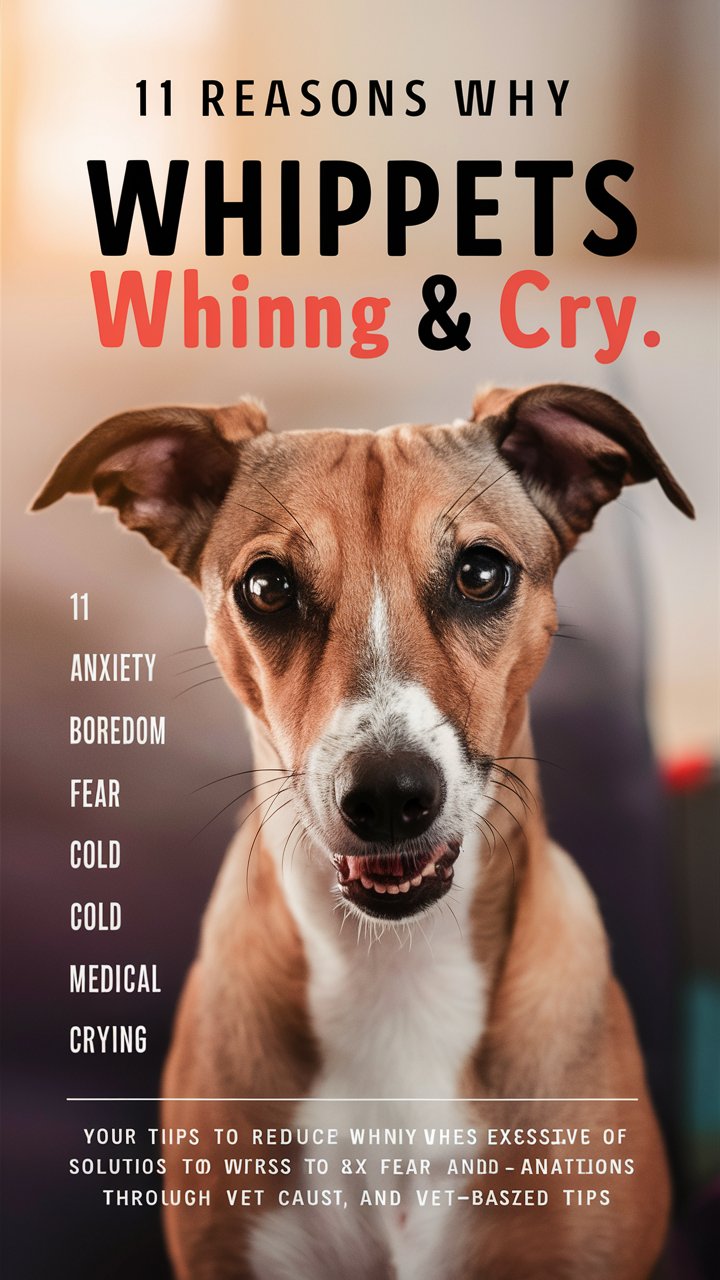
A Whippet whining & crying can melt your heart—or drive you crazy. If your Whippet constantly whines for attention, cries at night, or whimpers for no clear reason, you might wonder: is this normal, or is something wrong?
👉 The truth is, Whippets are one of the most sensitive and vocal sighthounds. While some whining is natural communication, excessive crying usually points to underlying behavioral, medical, or emotional causes.
In this advanced guide, we’ll cover:
- ✅ 11 detailed reasons Whippets whine & cry (with breed-specific insights)
- ✅ Proven training methods to reduce unwanted whining
- ✅ Nighttime crying solutions that actually work
- ✅ Vet-backed behavioral psychology tips to build confidence
- ✅ Extra enrichment hacks to keep your Whippet happy
Let’s dive in.
🐕 Why Do Whippets Whine & Cry?
Unlike many dog breeds, Whippets are naturally shy, sensitive, and people-oriented. They’re also intelligent problem-solvers. This means:
- They whine to communicate.
- They may cry more if owners accidentally reinforce the behavior.
- Their lean build & short coat makes them prone to cold, adding to vocal discomfort.
🔎 The 11 Causes of Whippet Whining & Crying
1. Communicating Basic Needs
Whining is a dog’s language. Your Whippet may be telling you:
- “I need to potty.”
- “I’m hungry/thirsty.”
- “I want to play.”
👉 Pro Tip: Track when the whining happens (before walks, at mealtime, when you grab keys). This will help you decode their pattern.
2. Craving Attention (Reinforced Behavior)
Whippets quickly learn that whining = attention. Even eye contact or “shhh” can reinforce the habit.
📌 Fix: Practice “planned ignoring.” Only give attention once your Whippet is calm. Reward silence, not noise.
3. Naturally Vocal Personality
Some Whippets are simply more expressive. Without training, this “habit whining” becomes their way of life.
🎯 Solution: Teach a “quiet” command using positive reinforcement. Reward calm behavior immediately.
4. Overstimulation & Excitement
Whippets can get over-aroused during play, greetings, or walks, leading to excited whining.
🔥 Tip: Calm greetings. Don’t make arrivals & departures dramatic. Keep energy low to reduce whining.
5. Fear & Insecurity
Whippets are timid by nature. Loud noises, new people, or sudden changes can trigger crying.
📌 Training Fix: Use gradual desensitization. Pair scary events (like thunder) with positive rewards (treats, toys, calm voice).
6. Pain or Medical Issues
Whining can mean injury, arthritis, dental problems, or discomfort. Whippets are prone to sensitivity to touch due to low body fat.
👉 Vet Check: Rule out pain if your Whippet suddenly whines without obvious triggers.
7. Emotional Mirror (Sensing Your Feelings)
Whippets are emotional sponges. They can sense your stress, sadness, or excitement and respond by whining.
🧠 Science Insight: Studies show dogs can smell cortisol (stress hormone). Your emotions affect their behavior.
8. Feeling Cold
Whippets have a thin coat and little body fat → very prone to chills. Whining is their way of asking for warmth.
✔️ Fix: Invest in Whippet-specific sweaters, heated dog beds, or cozy blankets.
9. Anxiety (Separation or General)
Separation anxiety is extremely common in Whippets. Whining often begins when they sense you’re about to leave.
📌 Training Tip: Practice short departures (30 seconds, 1 minute, 5 minutes). Reward calmness on return. Build duration gradually.
10. Boredom & Lack of Stimulation
Whippets need mental and physical stimulation. A bored Whippet = a whining Whippet.
🎯 Enrichment Ideas:
- Puzzle feeders
- Lure coursing (safe backyard setups)
- Training games like “find it” or “hide & seek”
11. Jealousy & Frustration
If another dog or person gets your attention, expect whining. Similarly, if they’re restricted from greeting someone, frustration whining can occur.
✔️ Fix: Teach impulse control with commands like “stay” and reward patience.
🛠️ 5 Advanced Ways to Reduce Whippet Whining
1. Planned Ignoring + Reward Silence
Ignore unnecessary whining → reward calmness with affection or treats.
2. Teach “Quiet” with Counter-Conditioning
- Say “quiet” → wait for silence → reward.
- Over time, silence = reward becomes instinctive.
3. Neutral Greetings & Departures
Avoid emotional highs & lows. Treat arrivals and exits as normal, boring events.
4. Build Confidence with Socialization
Expose Whippets to new environments, people, and dogs slowly. Confidence reduces fear-based whining.
5. Consult Your Vet or Behaviorist
Persistent whining despite training? Check for hidden pain, anxiety disorders, or medical issues.
🌙 Why Do Whippets Cry at Night?
Night whining is one of the most common complaints. Causes include:
- Learned habit (crying = attention)
- Boredom or lack of exercise
- Cold environment
- Anxiety or fear of being alone
✅ Solutions That Work:
- Tire them with evening exercise.
- Keep the crate cozy (blanket, toy, heartbeat pillow).
- Use calming aids like white noise or lavender spray.
- Gradually train independence at night.
⚡ Quick Recap
Whippet whining isn’t random—it’s always communication. The key is identifying why and responding correctly.
- Basic needs? Fulfill them.
- Attention-seeking? Ignore & reward silence.
- Fear or anxiety? Build confidence gradually.
- Medical issue? Always rule out with a vet.
With the right mix of patience, training, and understanding, your Whippet can go from a constant whiner to a calm, confident companion.