
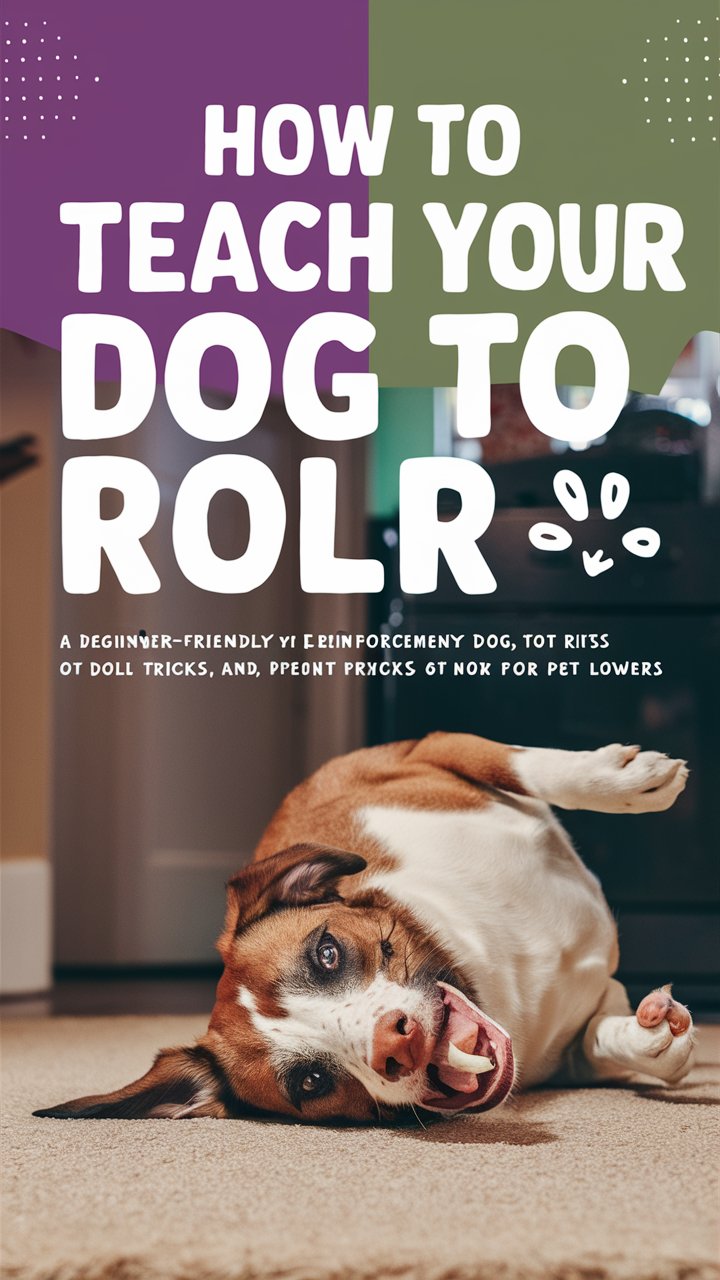
Teaching your dog to roll over is one of the most fun and rewarding tricks out there. Not only does it look impressive, but it also helps your dog build confidence, improves obedience, and strengthens your bond.
Whether you’re training a playful puppy, a curious rescue, or even an older dog, rolling over can be mastered with a little patience, the right approach, and plenty of encouragement.
In this complete guide, we’ll cover:
✅ Step-by-step training (from beginner to advanced)
✅ Common mistakes to avoid
✅ Safety tips for all breeds & ages
✅ Fun variations to level up the trick
✅ Expert FAQs to troubleshoot challenges
Let’s dive in! 🐶
🔑 Before You Start: What You’ll Need
- Small training treats (soft, bite-sized rewards work best)
- A quiet, distraction-free space (living room, yard, or training mat)
- Patience & positivity (dogs learn best when it’s fun!)
- Optional: Clicker (for clicker training enthusiasts)
🐕 Step 1: Teach the “Down” Position
Rolling over starts with your dog lying down. If your dog doesn’t know “down,” teach that first:
- Hold a treat near your dog’s nose.
- Slowly move it to the floor.
- As your dog follows, guide them into lying down.
- Say “Down” and reward immediately.
👉 Pro Tip: Keep training sessions short (5–10 minutes). Dogs learn better with consistency, not marathon lessons.
🐕 Step 2: Lure Your Dog Onto Their Side
Now that your dog can lie down:
- Hold a treat near their nose.
- Move it slowly toward their shoulder or ribcage.
- As they lean and flop onto their side, praise and reward.
👉 Troubleshooting:
- If your dog resists, practice “play dead” or gentle side positions first.
- Some breeds (like Greyhounds) are naturally stiff; be patient.
🐕 Step 3: Guide the Full Roll
This is the magic moment!
- With your dog on their side, hold a treat near their nose.
- Move your hand in a smooth arc over their body.
- Say “Roll over!” as they follow the treat and rotate.
- Celebrate when they flip belly-up and complete the roll.
👉 Pro Tip: Exaggerate your praise. Dogs love big reactions—they’ll associate rolling with excitement!
🐕 Step 4: Practice & Repeat
Like all tricks, repetition = mastery.
- Practice 5–6 times per session.
- Reward progress, even if they only roll halfway.
- Keep it upbeat—end training on a win.
👉 Avoid Overtraining: More than 10 minutes may bore your pup. Short, fun bursts keep their focus.
🐕 Step 5: Use the Command Alone
Once your dog understands the motion:
- Say “Roll over!” before luring with your hand.
- Gradually reduce treat use.
- Reward only when they complete the roll from the verbal cue.
Soon enough, your pup will roll over on command—no treats needed!
⚠️ Safety Tips You Shouldn’t Ignore
Rolling over is safe for most dogs, but here are key precautions:
- ❌ Avoid on hard floors – use a carpet or mat to prevent discomfort.
- ❌ Be careful with older dogs – arthritis or stiff joints can make rolling painful.
- ❌ Not all breeds are natural rollers – long-backed breeds (like Dachshunds, Corgis) may struggle; don’t force it.
- ✅ Always warm up with light play before trick training.
❌ Common Mistakes & How to Fix Them
- Skipping “Down” → Without a strong down position, rolling is confusing.
- Expecting perfection immediately → Reward small progress (half-rolls count).
- Relying only on food → Mix in praise, belly rubs, or toy rewards.
- Overtraining → Dogs tune out if sessions drag.
- Frustration → Dogs sense stress; stay patient and playful.
🎯 Advanced Variations to Try
Once your dog masters the basic roll, challenge them with:
- Double Roll – roll over twice in a row.
- Play Dead – teach them to stay belly-up dramatically.
- Roll Both Ways – cue left or right roll.
- Spin + Roll Combo – add flair by combining tricks.
❓ FAQ: Rolling Over Training
Q1: How long does it take to teach roll over?
Most dogs learn within 1–2 weeks with daily 5-minute sessions. Puppies often learn faster.
Q2: Can senior dogs learn this trick?
Yes, as long as they’re comfortable. Skip it if they show stiffness or pain.
Q3: My dog stops halfway. What should I do?
Reward half-rolls first, then gradually wait for more movement before giving the treat.
Q4: Do I need treats forever?
No. Use treats to teach, then transition to praise, toys, or petting.
Q5: Can I use a different command?
Absolutely. Try “Flip,” “Spin over,” or any consistent phrase your dog will recognize.
🐾 Final Thoughts
Teaching your dog to roll over is more than a party trick—it’s a bonding activity, a brain workout, and a confidence booster.
Some dogs will master it in days, others in weeks. The secret? Patience, consistency, and making training fun.
So grab some treats, clear a comfy space, and start rolling! With a little practice, your dog will be flipping like a pro in no time—and loving every second of it.